Bed bug education · Richmond, Virginia
How to Identify Bed Bugs in Your Home: Signs to Look For
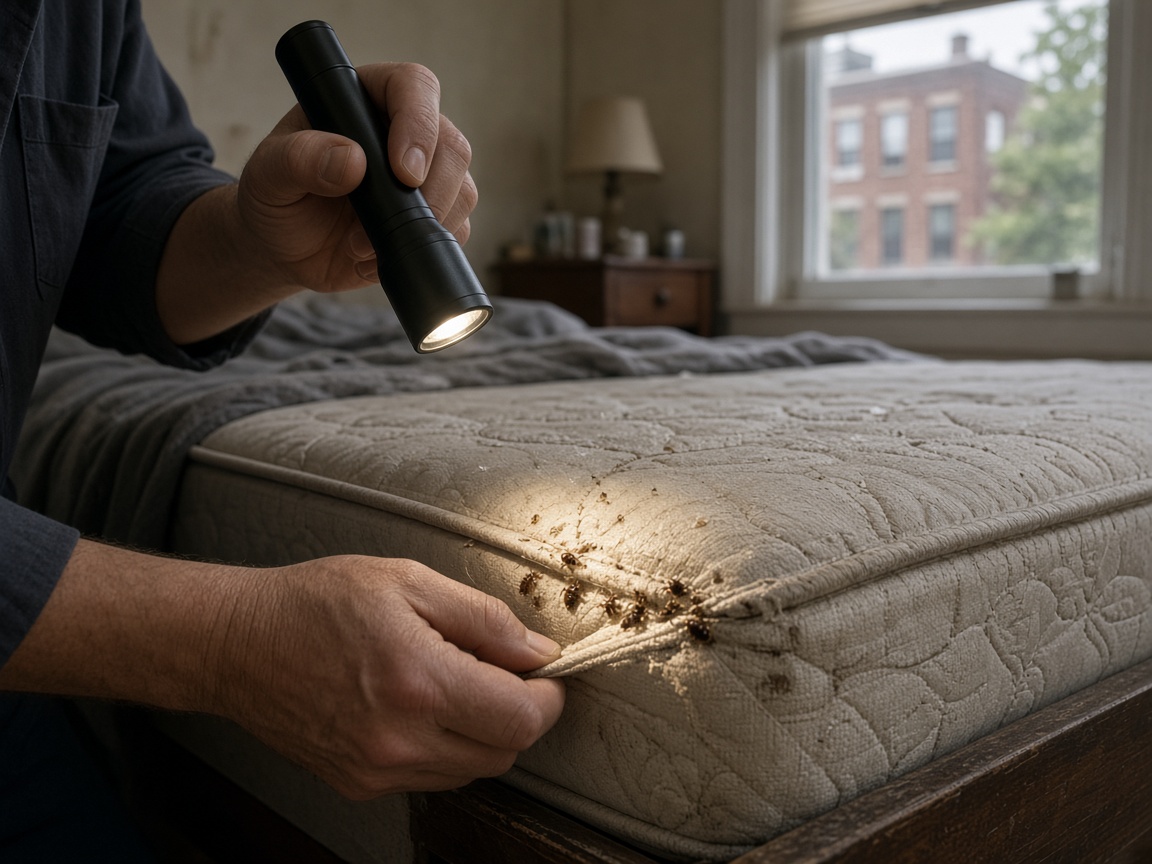
Finding a possible bed bug can be unsettling, but a few careful checks can help you decide what to do next. Bed bugs are small, flat insects that hide close to places where people sleep or rest. Bites alone cannot confirm an infestation because skin reactions vary and can have other causes.
Check mattress seams and bed frames
Use a flashlight to examine mattress piping, seams, labels, box springs, headboards and the joints of the bed frame. Look for live insects, tiny pale eggs, shed skins and small dark spotting. Check nearby bedside furniture and upholstered chairs as well.
Look beyond the mattress
Bed bugs may hide in cracks in furniture, behind loose trim, along baseboards and in other narrow spaces close to a resting area. In apartments or connected housing, report confirmed signs to property management so an appropriate inspection can consider nearby units when necessary.
Do not rely on bites alone
Bite marks are not a reliable identification tool. Some people have no visible reaction, while others develop itchy bumps that resemble other insect bites or skin irritation. If you find an insect, capture it in a sealed container or take a clear close-up photo for identification.
When to contact a professional
Consider a professional inspection when you find a suspected bed bug, repeated signs near sleeping areas, or evidence in more than one room. Ask what the inspection includes, whether adjacent rooms should be checked, and what preparation is needed before any treatment.
A practical first response
Avoid moving potentially infested bedding or furniture through the home. Bag washable items before carrying them to the laundry, follow fabric care labels, and avoid applying household pesticides to mattresses unless the product label specifically permits that use. A qualified provider can recommend next steps based on the property.