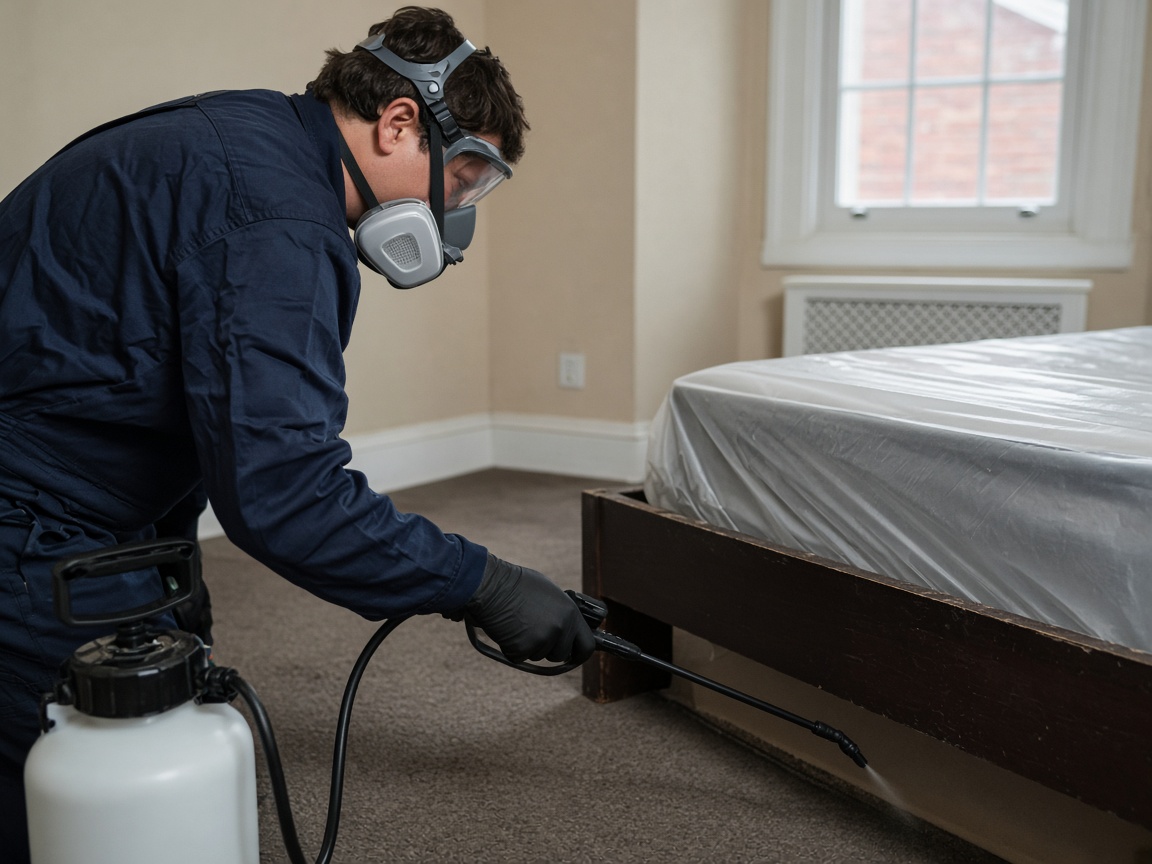
Richmond's older housing stock in neighborhoods such as the Fan District and Oregon Hill features plaster walls, baseboard gaps, and hardwood floors that create ideal bed bug harborage. Chemical treatment relies on EPA-registered residual insecticides applied to these voids and contact points rather than broad surface spraying. Hot humid summers accelerate bug activity while mild winters allow year-round reproduction, so treatments must account for active infestations in both heated and unheated spaces like attics above Carytown row homes.
The provider should explain the steps involved, any preparation required and how the treatment will be monitored.
Follow-up visits focus on egg hatch cycles that occur seven to ten days after the initial application. Re-treatment targets any newly hatched nymphs missed in the first pass. Homeowners must remove clutter from floors and launder bedding beforehand, as chemical efficacy drops when items block access to hiding spots along baseboards in Jackson Ward properties.
The provider should explain the steps involved, any preparation required and how the treatment will be monitored.
Questions to ask a provider
Ask the provider to explain how the inspection findings affect the proposed treatment plan, including preparation, safety precautions and follow-up.
Questions to ask a provider
Ask the provider to explain how the inspection findings affect the proposed treatment plan, including preparation, safety precautions and follow-up.
Bed Bug Chemical Treatment Services We Offer
✓Crack and Crevice Chemical Application
Precise residual insecticide injection into wall voids and baseboard gaps typical of Richmond's older Fan District and Jackson Ward homes.
✓Mattress and Box Spring Treatment
Targeted chemical application to bed frames and seams that kills bugs and eggs without saturating fabric surfaces.
✓Multi-Unit Barrier Treatment
Perimeter chemical barriers in apartments and row homes near Church Hill and Shockoe Bottom to block migration between units.
✓Furniture Frame Residual Treatment
Application to wood and metal furniture frames in Carytown and Museum District properties where bed bugs commonly hide.
✓Follow-Up Chemical Reapplication
Second-visit treatment timed to egg hatch cycles using the same residual products for complete elimination.
How it works
- 1
Initial Inspection
A qualified provider assesses the rooms, furniture and potential hiding places relevant to the property.
- 2
Preparation Guidance
Homeowner receives specific instructions to clear floors and launder items before the chemical application visit.
- 3
Targeted Application
Residual insecticide is injected into cracks, crevices, and bed components using label-directed methods.
- 4
Follow-Up Visit
Return treatment addresses newly hatched nymphs seven to ten days later to break the life cycle.
Pricing
Pricing depends on the property, the extent of activity and the treatment selected. Request a written estimate from the provider before authorizing work.